
Our falls prevention advice guide gives you a brief introduction to falls, the consequences
of falls, how to reduce the risk of falls and what to do to prevent falls in the future.
Contents
• Why preventing falls is important
• The consequences of a fall
• Why you may fall
• Bringing up your concerns
• How to reduce the risks of falls
• Hazards at home
• Top Tips – Quick reminder
Why preventing falls is important
As people grow older they are increasingly at risk of falling and injuring themselves. Around 1 in 3 adults over the age of 65, and half of people over 80, will have at least one fall a year. The majority of falls can result in broken bones, weakened muscles, or a loss of confidence. Falls can lead to a long stay in hospital.
Falls can be a symptom of a new or worsening health problem, potentially leading to severe injuries and affecting independence and quality of life.
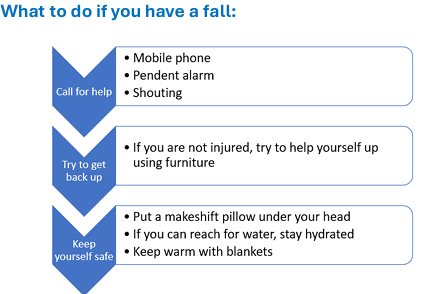
Falls are the most important type of accident and many occur in and around the home. Falls can often result in fractures (broken bones), most commonly in the hips and wrists. People with thin bones, as a result of osteoporosis, are likely to sustain fractures more often. Falls can often result in a ‘long lie’ for a person who is unable to get up from the
floor. This can have potentially serious consequences such as hypothermia,
bronchopneumonia and pressure sores. A ‘long lie’ of 12 hours or more can seriously affect a person’s recovery from a fall.
Why you may fall
You are more likely to fall as you get older because as you age, your sense of balance may decline, your muscles may weaken, your vision may deteriorate and your reaction time slows, making it harder for you to avoid something in your path or adjust to a sudden change in the surface on which you are walking.
Medication
Medication can also have an impact on you with your balance and perception. Your risk of falling may increase if you are on four or more medications, if you take diuretics, sedatives or other sleeping medications, high blood pressure medications, or medication for some psychological conditions.
In addition, older people may be often affected by many health conditions that can increase the risk of falls. Lung disease and cardiovascular disease are also two factors that could heighten your
risk of falling. Lung disease may make it more difficult for you to move around and do day to day activities, which can therefor mean muscle loss and balance. Cardiovascular disease can also be the same in regard to an inactive lifestyle. This disease can cause fainting.
Practice moderation
The negative effects of too much alcohol on our sight, hearing, balance and judgement about personal safety are very clear. Whether used alone or combined with medication, alcohol use can result in dangerous falls. Keep to wise and moderate consumption.
Poor vision
Poor vision, cataracts, macular degeneration and glaucoma can affect your perception or make it difficult for you to see obstacles. Regular eyesight tests should be part of your routine.
Gait and balance disorders
Stroke, Parkinson’s disease and hypothyroidism, among others can affect your balance and ability to walk. Weakness or a general lack of conditioning can also have an effect. If you are concerned about your gait or balance, speak to your GP about it.
Lung disease
Disease of the lung, such as emphysema, may make it difficult for you to get around. When you become inactive, you may lose some of your muscle conditioning and balance. That may increase your chance of falling when you walk. If you are concerned about this, discuss with your GP or chest specialist the possibility of being referred to a physiotherapist to teach you breathing control and breathing exercises. Visit the British Lung Foundation for more information.
Cardiovascular disease
Congestive heart failure, arrhythmia and other conditions affecting your heart and blood vessels can cause fainting or lead to inactive lifestyles which, as with lung disease, can increase your risk of falls. If you are worried about falling, it may be worth telling your GP about this.
Disorders affecting your legs and feet
Arthritis, foot problems, muscle weakness and peripheral neuropathy (nerve damage that can cause unsteadiness and numbness), tingling, weakness and pain in your feet or hands may affect your coordination or lead to an inactive lifestyle that puts you at risk of falls.
Bladder conditions
Incontinence or the need to urinate frequently, especially at night, can lead to falls in several ways. You may stand up too quickly, leading to faintness from a momentary drop in blood pressure. Or you may trip on your way to the bathroom because you are still sleepy or you did not turn on the light. Take your time getting up and make sure that you can switch lights on from bed and other appropriate places. If you are concerned about this contact your district nurse or visit the Age UK website where you can download
further information.
Bringing up your concerns
Discuss concerns about falling with your GP. Your GP may check for vision problems and/or review prescribed medications. Your GP may also evaluate your balance and movement. If necessary, he or she may prescribe physical therapy to help improve your balance and strength. Your GP may also recommend that you use a walking stick or other walking aid.
How to reduce the risk of falls
General physical fitness
Given that your daily routines may become less physically demanding or you may stop a sport or exercise regime as you get older, you can experience reduced physical fitness, increasing the risk of falls. Maintaining or regaining physical fitness is the most effective preventive measure of all. All forms of exercise, formal and informal, can help maintain strength and vitality and protect you from injury.
Ability to maintain balance
Balance is an important element of fitness. Tai Chi, yoga and dancing are all exercises that increase balance and steadiness – proof that keeping fit can be fun. Other factors can affect balance, including improper use of spectacles, misuse or disuse of assistive devices, and certain medications. Exercise for balance and use devices and medications appropriately. Speak to your GP if you wish to take up exercise or are unsure about how to use assistive devices or take your medication.
Footwear and care
Poorly fitting shoes or slippers and poor foot health contribute to risks of falling.
Research has shown that older people are more likely to fall in the home if they are wearing ill-fitting footwear. A significant number of older people fall every year because of slippers that do not fit very well or have become unsafe through wear and tear – a problem identified as one of the main causes of falls.
Although falls at home are a major cause of death and disability in older people, many could be prevented by taking relatively simple measures. By acquiring new, properly fitted slippers, you can eliminate one of the big risk factors known to cause people to fall in the first place. Practice good foot care. Check your feet regularly.
Diet and eating habits
Regular healthy meals help keep up strength and vitality. If you do not enjoy preparing meals for yourself, think about inviting friends, eating out or developing a routine that makes you look forward to your meals such as taking a walk to work up an appetite, trying out new recipes, or having a special treat.
Missing meals can cause weakness and dizziness. Eating regular, balanced, healthy meals will help you to keep your strength.
Social isolation
Post-falls syndrome such as depression, fear of falling and other psychological
problems are common effects of repeated falls. Loss of self-confidence as well as social withdrawal, confusion and loneliness can occur, even when there has been no injury. There is a wide range of services available in the community that can be accessed to help you regain your confidence.
Hazards at home
Making simple changes at home, whether it’s for you or someone living with you can also reduce the risk of falling. Here is a safety reminder:
Living room
Keep electrical and telephone cords tucked out of the way. Arrange furniture so that you can move around it easily. Get rid of throw rugs and make sure carpeting is secured to the floor. Buy chairs and couches that are easy to get up from.
Kitchen
Use a slip-resistant step stool when you need something from a high shelf, or consider moving items to a lower shelf. Make sure phone an electrical cords are out of the way.
Bathroom
Install grab bars on walls around the bathtub and beside the toilet – soap dishes or a towel rod can break away under a person’s weight. Install a toilet seat riser. Use non skid mats, adhesive strips or carpet on surfaces that may get wet. If you have difficulty getting in and out of the tub, consider installing a padded shower seat and a portable ,hand-held shower head to let you to sit while bathing. Keep children’s toys out of the tub.
Bedroom
Get rid of throw rugs. Place light switches within reach of the bed and install a night light between the bedroom and bathroom. Make sure that you can reach the telephone from your bed. Install a grab bar next to the bed. When you do get up from bed, do so slowly to avoid dizziness. Nightwear should be short enough so that you will not trip over it.
Stairways, hallways and pathways
Keep free of clutter and check to see that areas are well lit. Make sure your carpet is secured and get rid of throw rugs. Install handrails on both sides of the stairs and make sure they are securely mounted. Apply brightly coloured tape to the face of the steps to make them more visible.
Top Tips – Quick Reminder
Remove throw rugs and excess furniture, such as coffee tables. Avoid high-gloss wax on floors. If small children or pets live in the house, keep their toys off the floor. In some situations, the use of hip protectors (pads you wear over your hips to prevent fractures) can help to prevent injury from falls. If you are interested in them ask your GP or nurse for more details.
Other tips for avoiding falls at home include wearing rubber-soled or low-heeled shoes to prevent slips and purchasing a cordless phone to carry with you so that you do not have to hurry to answer the phone. If you are worried that you may not be able to get up if you fall, consider using an Aid-Call.
In the garden
Put the hose away in a secure area when you are not using it. Make sure rakes and shovels are safely put away when not in use. Wear shoes that support and stabilise you. Have garden tools handy (i.e. in your gardening apron pocket).
Do not walk on wet grass; keep the yard, pathways and steps free of leaves and twigs. Make sure your garden furniture and ornaments are steady and in good repair. Install handrails where there are steps.
When going out
Take all the time you need, plan ahead, do not rush. Wear footwear to prevent slipping and avoid laces that may come undone. Use your walking aid if needed. Walk carefully, be alert of sidewalk cracks, obstacles, slopes, slippery surfaces and other hazards. Do not load yourself down with packages. Take advantage of home delivery or use a pushcart (which can also act as a walking aid).
Be a defensive walker, watch for traffic, bicycles and rollerbladers. Plan your trip so you do not have to go out during the rush hour, darkness or bad weather.