

Not every injury is just an injury.
Sometimes what presents in the clinic as a niggling right Achilles is actually a story about perimenopause, a recent ADHD diagnosis, a full and demanding life, and a woman who runs because it keeps her sane, and who is absolutely not willing to give it up.
This is one of those stories.
Meet our patient
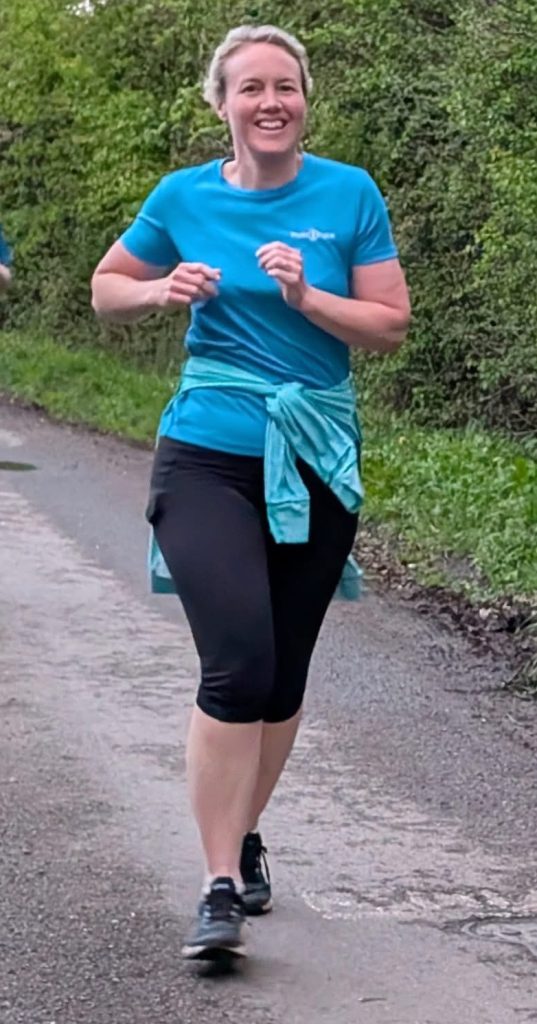
She is 44, a dedicated runner, and she loves it. Three times a week without fail, two training runs and one longer run at the weekend. Running is her reset button. Her mental health anchor. The one hour of the day that belongs entirely to her.
She came to us with a right Achilles that had been grumbling for a while. Morning stiffness – that classic stiff first step out of bed that eases off as she moves. Tenderness to touch along the tendon. No real problem while she was actually running, which is typical of mid-portion Achilles tendinopathy, but enough to make her worried that it was heading somewhere worse if she ignored it.
And she had been ignoring it. Because life is busy. Because she thought it would just go away. And because stopping running felt like too high a price to pay.
What she did not want, and what we did not ask her to do, was stop.
The bigger picture
What made this case particularly interesting, and what shaped our entire approach, was what was happening for her beyond the tendon.
She is in the sandwich generation of caring for children and ageing parents simultaneously, managing a household, working. The mental load is enormous. She had recently been diagnosed with ADHD in adulthood, which brings its own adjustment, often relief, but also a lot to process. And she is perimenopausal.
That last point matters enormously for tendon health and it does not get talked about nearly enough.
Oestrogen plays a significant role in collagen synthesis and tendon integrity. As oestrogen levels fluctuate and decline during perimenopause, tendons can become less pliable, slower to recover and more vulnerable to load. It is not a coincidence that Achilles tendinopathy is increasingly common in women in their 40s and 50s. Hormonal changes create a genuinely different biological environment for the tendon, and managing load accordingly is not being overcautious, it is being accurate.
Chronic stress also matters here. Elevated cortisol over time has a catabolic effect on connective tissue. When life is relentlessly demanding, and hers was then then body simply does not recover as efficiently. The tendon that might have bounced back quickly in her 30s now needs more from her in terms of recovery, sleep and stress management.
None of this is a reason to stop running. But all of it is context that changes how we approach rehab.
What we did
Our goals were straightforward: keep her running, resolve the tendinopathy, and build a resilient tendon that would support her running long-term.
Load management was the starting point. We did not reduce her running to zero but we looked carefully at the volume, intensity and recovery between sessions and made some sensible adjustments. The goal is always to find the load the tendon can tolerate and work from there, not to catastrophise and pull everything.
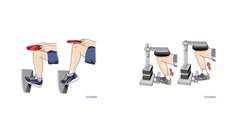
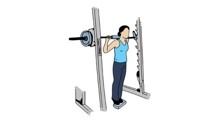
Heavy slow resistance training three times a week, targeting the calf and soleus specifically formed the backbone of her rehab. This is the gold standard for Achilles tendinopathy and the evidence behind it is strong. Heavy, slow, progressive loading is the stimulus the tendon needs to remodel and strengthen. We built it up gradually, week by week, making sure the programme was realistic for someone with a busy life and genuinely limited time.
MLS laser therapy supported her recovery alongside the hands-on work. Laser helps reduce local inflammation and promote tissue healing, and combined with soft tissue massage it made a real difference to how the tendon was responding between sessions.
The GP conversation was one we actively encouraged. Talking to her GP about the perimenopause piece, including whether HRT might be appropriate for her felt important. The hormonal context of this injury is not something physiotherapy alone can address, and getting the right support medically alongside the physical rehab is genuinely valuable. We signposted that conversation and she had it.
Therapeutic support was also something we gently raised. The stress in her life is real, and while we are not therapists, we know that chronic stress is not neutral when it comes to recovery. She was already thinking about this and took steps to access some support for herself. Reducing the mental load, even a little, where possible is part of the picture
How she got on
She continued running throughout. We did not take that away from her. With the load managed sensibly and the rehab programme in place, she was able to keep her three sessions a week, modified where needed in the earlier weeks without aggravating the tendon further.
The morning stiffness improved steadily. The tenderness reduced. The tendon got stronger. And she felt, perhaps most importantly, that she had a plan and that someone understood the whole picture, not just the bit of anatomy that was sore
What this case reminds us
Tendons do not exist in isolation. They exist in bodies, and bodies exist in lives.
A 44-year-old woman’s Achilles tendinopathy is not the same as a 25-year-old man’s. The hormonal environment is different. The recovery capacity is different. The context, the stress, the life stage, the mental health is all different. Good physiotherapy and sports therapy take all of that seriously.
If you are a runner in your 40s with a grumbling Achilles, a few things are worth knowing:
- You do not necessarily have to stop running. Load management is not the same as complete rest.
- Heavy slow resistance training is your friend. Calf raises done properly and progressively are the single most evidence-based thing you can do for this injury.
- If you are perimenopausal, talk to your GP. The hormonal piece is real and worth addressing.
- Stress matters for tendon health. It is not “just in your head” it is biology.
- Getting support early means a better outcome. A niggle treated now is easier than a rupture treated later.
If any of this sounds familiar, we would love to hear from you. Book in for an assessment and let us look at the whole picture, not just the sore bit.
📞 02394 350270
🌐 www.physio-logical.net
📍 The Stable Block, Stansted Park, Rowlands Castle